
The Event
“Trauma, Tresses, & Truth”
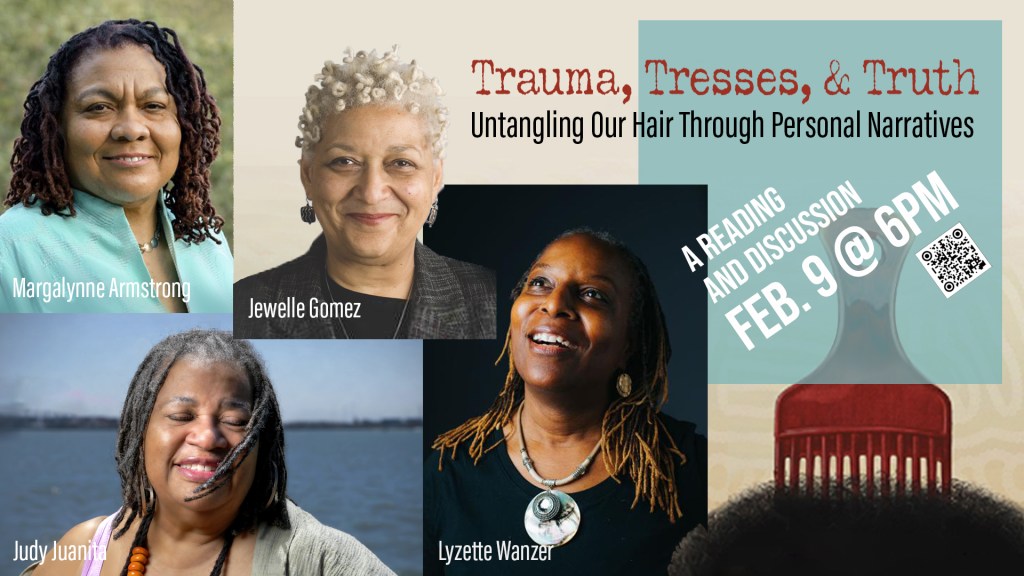
On Feb. 9, 2023, The Diasporic Peoples Writing Collective (DPWC) hosted a literary event at which several distinguished women authors treated an enthusiastic audience to several readings from their anthology, “Trauma, Tresses, & Truth: Untangling Our Hair Through Personal Narratives.” The anthology contextualizes the many experiences linked to Black hair.
The Art
Hair is indeed linked to culture, pride, and identity and this is evidenced in the many styles worn by people throughout the African diaspora. These styles have been the inspiration for prose, poetry, and the illustrations of Sal Steiner, a local, San Francisco artist, whose drawings appear on the pages of “Trauma, Tresses, & Truth.”

The Artists
The anthology features writings by Lyzette Wanzer (the editor and producer of the anthology as well as a contributor), Judy Juanita (a creative contributor and literary artist), Margalynne Armstrong (an essayist, legal scholar and professor at Santa Clara University, SCU), and Jewelle Gomez (an author of speculative fiction). Gomez happened to take ill before the event, and unfortunately was unable to attend; nevertheless, the audience, which included students and members of the campus community, packed the Hammer’s intimate Black Box theater.
The C.R.O.W.N. Act
The writings on the pages of “Trauma, Tresses, & Truth” were inspired by a movement to create a respectful and open world for natural hair. This movement, known as the C.R.O.W.N. Act, advocates for legislation that will protect people from discriminatory practices that target hair textures and styles.
The beautiful essays that were read at this event riveted the audience as their subjects touched upon everything from history to personal experiences, celebrity experiences, and the experiences of children who have faced audacious criticisms that target Black hair.
The Q & A
Things took an interesting turn when the question and answer period opened at the latter part of the event and students were able to ask questions and offer comments, like Jelani Finkley (majoring in urban planning), who observed the link between Dove Industries, Inc. and the C.R.O.W.N. Act as inherently political and financially advantageous to the corporation more than to the cause. It was Finkley’s astute observation that led to subtopics like the objectification of Blackness in advertising and in the media. And when the audience’s questions turned to entertainment, politics, and the law, Armstrong, the legal professor from SCU, was well equipped to address them.
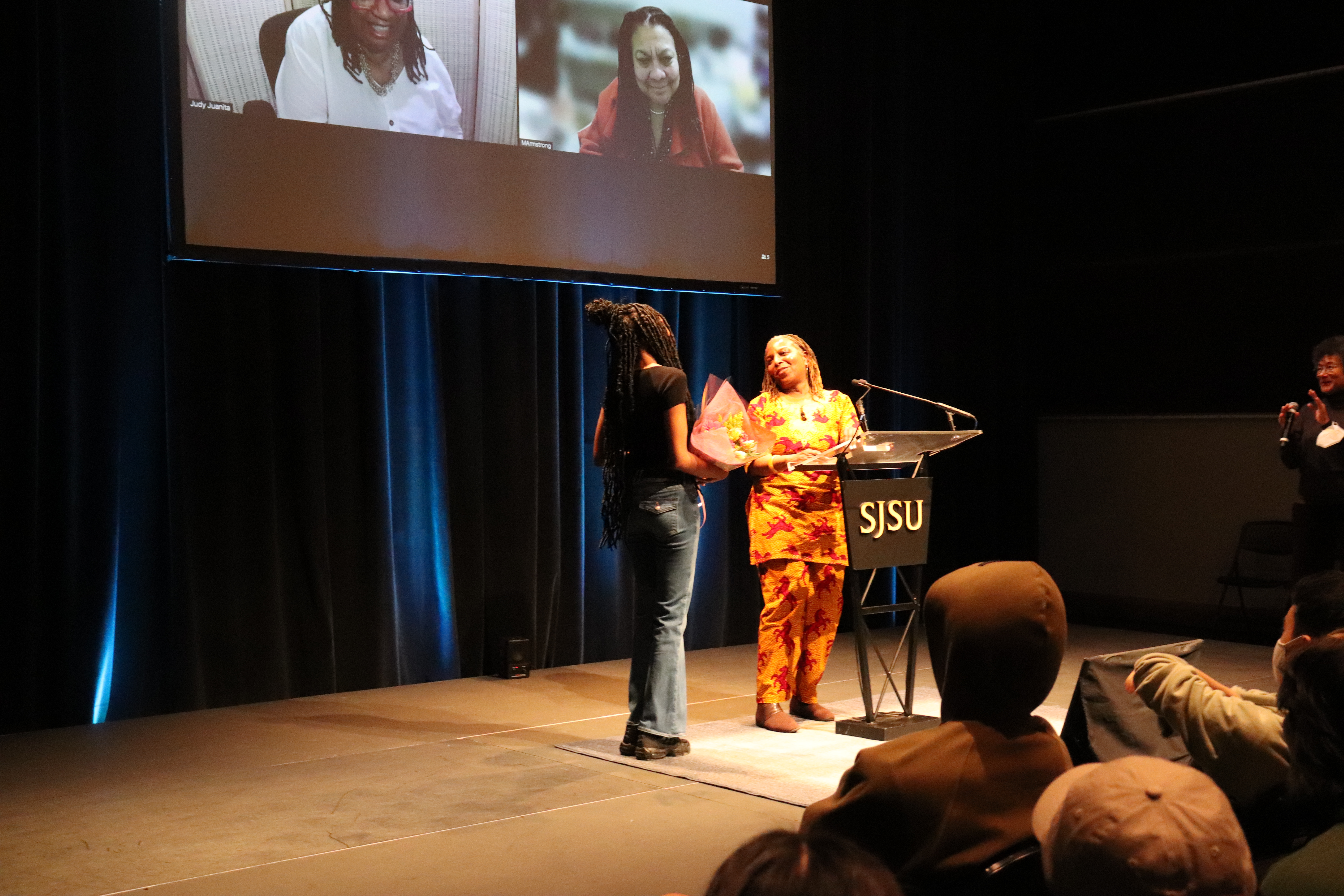
This reading of “Trauma, Tresses, & Truth” gave students an opportunity to learn more about the history of Black hair and its impact on different areas of society. Discourse on Black hair will always encompass more than just style, as hair has been and still remains highly politicized in almost every corner of the world.

Link to the site for “Trauma Tresses & Truth”: https://www.chicagoreviewpress.com/trauma–tresses–and-truth-products-9781641606707.php
Link to “Trauma, Tresses, & Truth” on Goodreads: https://www.goodreads.com/book/show/60181542-trauma-tresses-and-truth

This article was written by Israel Archie
Archie is a first-gen journalism student at San Jose State University, SJSU, by way of Sacramento. He says he has had so many opportunities since attending SJSU, like landing an internship in journalism and two student organization leadership positions that have helped him sharpened his skills as a writer.
Archie has worked for consecutive semesters as a SJSU Peer Connections tutor dedicated to courses with high enrollment. He says, “I’m involved with several positions that help me grow my skills with different types of writing.” He believes these work experiences will enable him to be the type of agile journalist clients often demand.
 DIASPORIC PEOPLES WRITING COLLECTIVE